What Slim, Straight, and Relaxed Jeans Did to My Thighs
I own three pairs of jeans in three different cuts, and each one solves a different problem. Of all the closet staples I’ve bought and regretted, jeans cost me the most trial and error, mostly because the same label can mean three different things depending on the brand.
Slim: Great Standing Up, Different Story Sitting Down
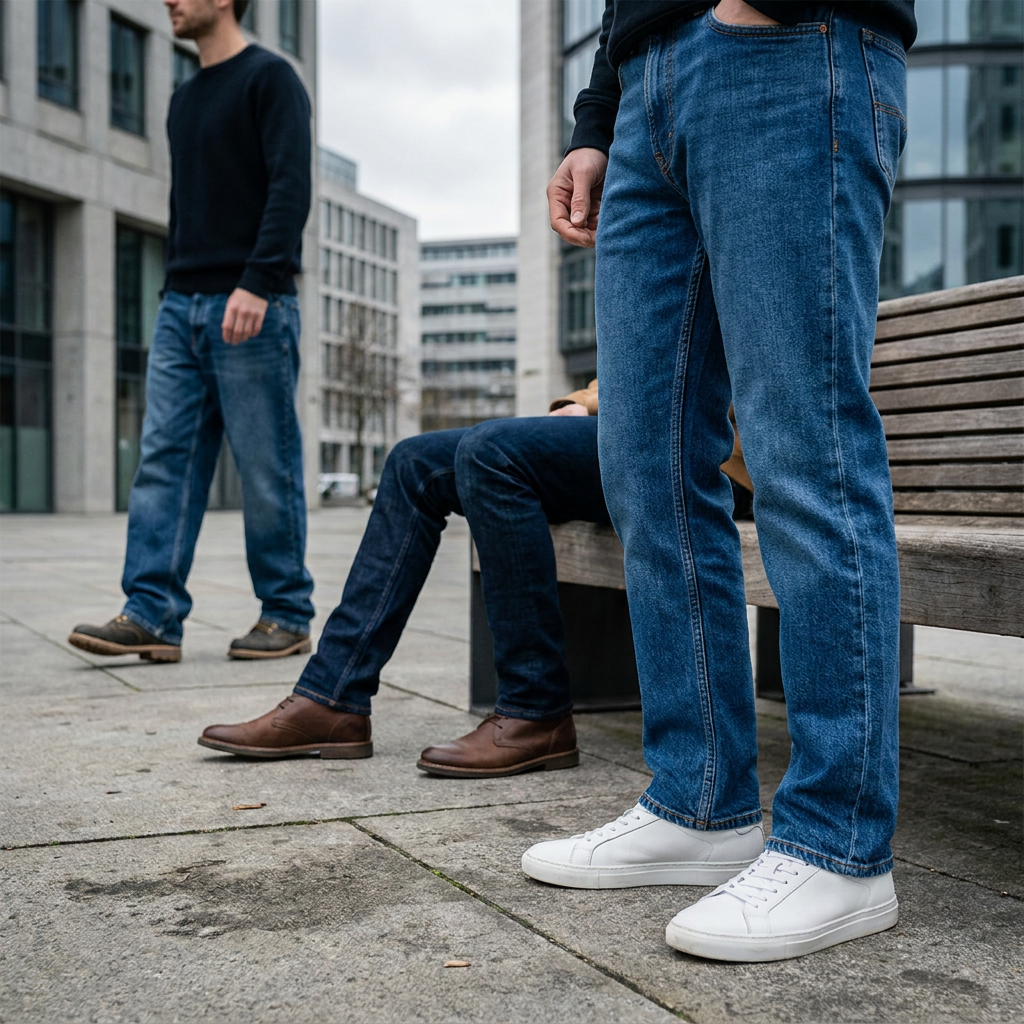
I bought my first slim pair for a job where I stood a lot, and they looked sharp for about four hours. Then I sat through a long train ride and found out what the fabric was doing. Slim means close through the thigh and narrowing toward the ankle, and that cut depends on stretch. Check the tag for elastane, because a slim pair in 100 percent cotton will fight you every time you bend your knee.
Do the store test I now do with everything. Sit in a chair, cross a leg, then squat down like you’re picking something off the floor. If the seams pull across your thighs or the waistband digs in, that pair will annoy you by lunch. A good slim pair should let you pinch a little fabric at the thigh with two fingers, not a handful.
The other thing nobody warns you about is knee bagging. Stretch denim loosens where you flex, and by evening mine had bubbled out at the knees. A wash cycle and a tumble in the dryer on low tightens it back up for a few hours. I wear slim pairs with boots or low sneakers, since a chunky shoe makes the leg opening look pinched.
Straight: The Pair I Stopped Thinking About
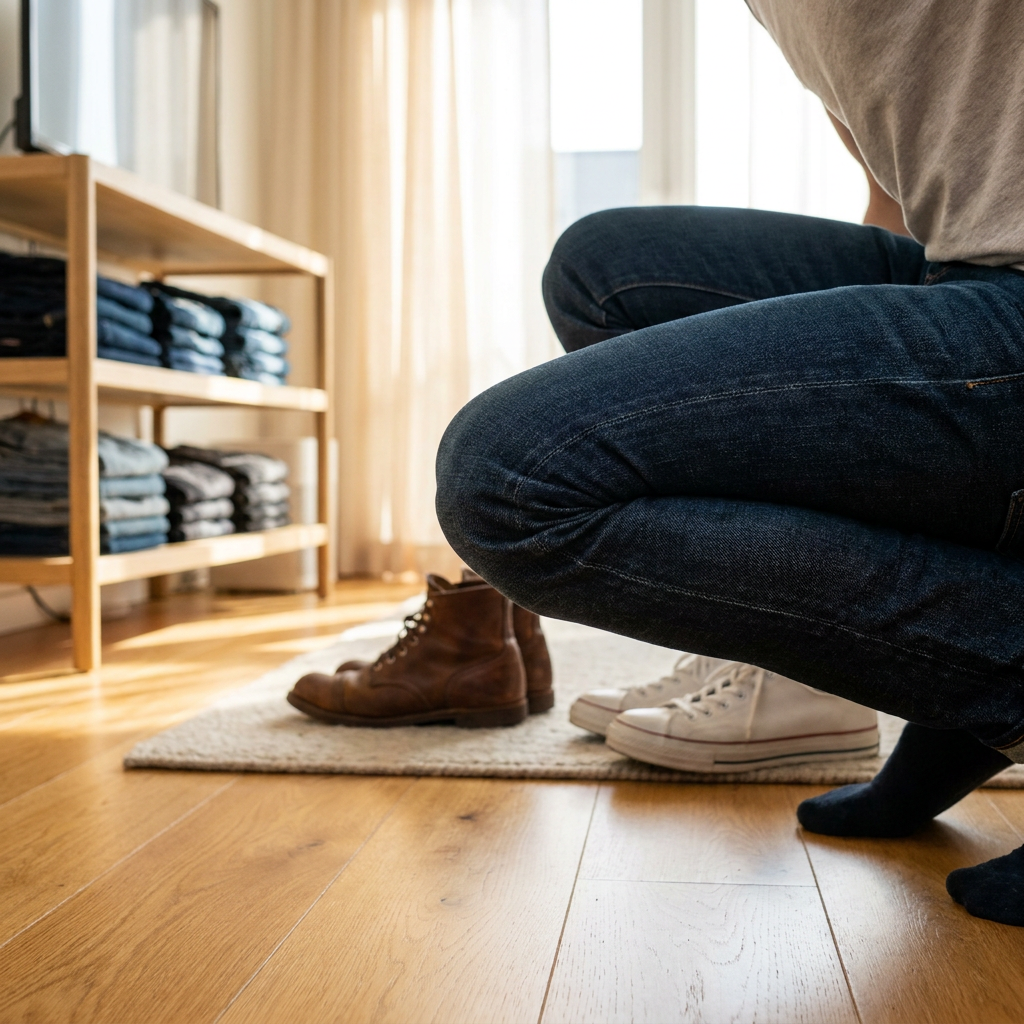
My straight-leg pair is the one I grab without checking the weather or the plan. The leg stays the same width from knee to hem, so nothing grips and nothing flares. Levi’s 501 is the classic version, and plenty of other denim brands make their own take on it.
Here’s what I look at now, in order. First, the rise, the distance from crotch to waistband. A mid rise sits at about the hip bone and stays put without a belt fighting it all day. Second, the hem. I have mine cut so the opening grazes the top of my shoe. Any longer and it bunches, and any shorter looks like I outgrew them.
Third, shrinkage. Dark unwashed pairs can shrink on the first wash, so I buy a hair long or read the care tag before cutting anything. A tailor can take up a hem in ten minutes, but nobody can add length back.
Straight jeans also work with the widest range of footwear I own. White leather sneakers, work boots, loafers, even beat-up running shoes all look fine. The cut doesn’t shout, which is why I’ve had the same pair on rotation for years.
Relaxed: Where the Fabric Does the Work
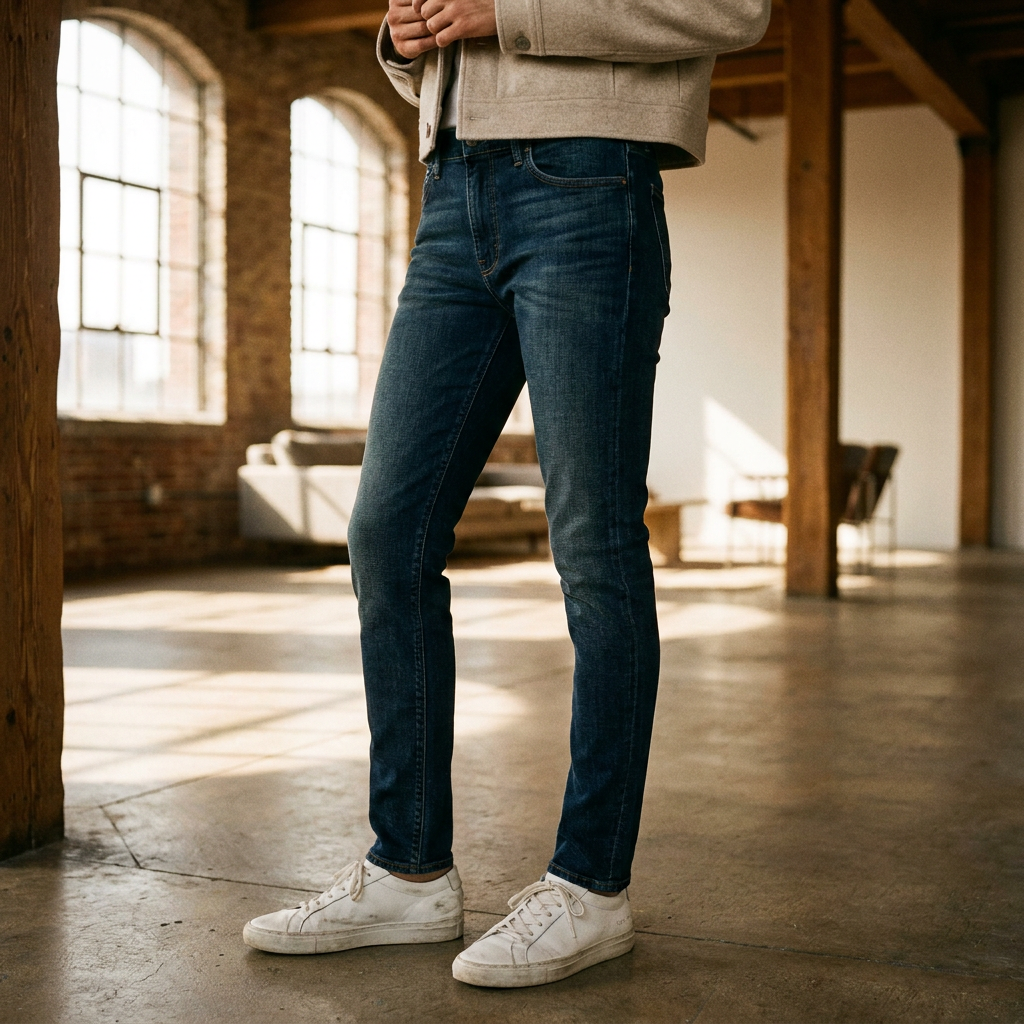
Relaxed is the cut where I made my worst mistake. My first pair was lightweight and baggy, and it just hung off me like pajama bottoms. Relaxed fits need weight. A heavier denim holds a clean line from hip to ankle, while a thin one collapses into wrinkles around your knees.
The cut itself is roomier through the seat and thigh, with a leg that tapers a little or goes straight down. That extra room is great for sitting cross-legged, riding a bike, or carrying a full day’s worth of stuff in your pockets. I wear mine to farmers markets and long road trips because nothing binds.
The trick is balancing the top half. If the jeans are loose, I keep what’s above them closer to my body: a fitted tee, a cropped jacket, a sweater that stops at my waist. Pair roomy jeans with an oversized hoodie and you disappear.
Check the waist with a belt on, since relaxed pairs sometimes gape at the back. And mind the hem. Mine stacks slightly over my boots, which I like, but a pair that drags on the ground wears out at the heel in a few months.