Olive Chinos and a Rust Sweater Changed How I Pick Colors
For years I assumed good color sense was something other people were born with. Then I noticed the outfits I got compliments on all followed a few simple pairings, and the ones I regretted ignored them. I now work from five combinations I’ve tested on myself over several seasons. They’re grouped by how they behave, because some are quiet, some do the talking, and one is mostly a safety net for tired mornings.
The Quiet Pairs: Navy with Brown, and Gray with Navy

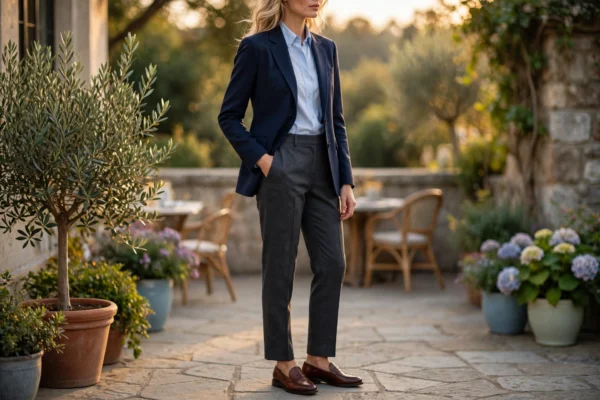
Navy and brown is the combination I’ve gotten the most mileage from. Navy chinos or a navy merino crewneck with brown leather boots or a brown belt looks deliberate without trying. I stumbled onto it when I bought my first pair of brown Chelsea boots and found they worked with nearly everything I already owned in navy. The old rule said never to mix the two, and the old rule was wrong, or at least out of date.
Match your leathers when you can. If the boots are brown, the belt should be brown too, and I try to keep both in a similar shade. A light tan belt with dark chocolate boots looks like a mistake, while two mid-browns look like a decision.
Gray with navy is the calmer cousin. A heather gray sweatshirt under a navy unstructured blazer is probably my most-worn outfit of the last two years. Both colors are low in saturation, so they don’t compete, and the outfit holds together whether I’m at a desk or on a train. Add white sneakers and you’ve covered most of a work week.
Where this pairing falls flat is when the two grays or two blues sit too close together. A charcoal sweater over slate trousers looks like I couldn’t find the matching half. I push the shades further apart, light gray on top of a dark navy bottom, or the reverse.
Texture helps these quiet colors avoid looking flat. A smooth cotton tee under a nubby wool sweater, or canvas pants beside a knit, gives the eye something to do. I notice this most in photos, where a flat navy and flat gray outfit nearly disappears while the textured version holds up.
The Warm Pairs: Olive with Rust, and Cream with Tan

I fought olive for years because I thought it made me look like I was headed for a camping trip. Then I tried olive chinos with a rust-colored corduroy shirt, and it clicked. Both colors sit on the earthy, warm side, and neither is loud. A cream tee underneath keeps it from feeling heavy, and brown boots tie it together.
The rust has to stay muted. A brighter orange-red next to olive reads like a holiday decoration, so I look for a shade that leans brown. Holding the item against my forearm in good light helps. If it looks like a traffic cone against my skin, it goes back on the rack.
Cream with tan is a softer version, and I wear it when I want to look relaxed and slightly put together. A cream knit or a heavyweight cream tee, tan chore coat, and light-wash or dark jeans. I wore this mix to a friend’s backyard wedding in early fall and a stranger asked where the coat was from. The tan canvas of my Carhartt picks up warmth from the cream without competing with it.
Dirt is the cost of cream. White-adjacent colors show everything, so I spot-clean with a damp cloth and a drop of mild soap before the stain sets, and I keep cream pieces away from the pen in my bag. Heavier fabrics hide marks better than thin ones, which is one reason I skip cream in lightweight cotton.
A reasonable question is whether warm pairs work for everyone. I can only speak from my own experience, and warm tones suit me well. If olive makes your face look tired, try holding it near your chin before buying. That test has caught more bad purchases for me than any price tag.
The Safety Net: Black and White, With One Accent

Black and white is the pairing I reach for when I’m too tired to decide. A white tee, black jeans or black trousers, and clean white leather sneakers always look like I made an effort, even on days I didn’t. The contrast is sharp, so everything needs to be clean. A grayed-out white tee next to crisp black looks tired, and I replace mine when it starts to dull.
Pure black and pure white can feel stark, which is why I add one accent. A mustard pair of Darn Tough socks, a burgundy beanie, or a brown leather belt breaks it up. Only one accent, though. Two or three and the outfit starts to look like a flag.
I used to avoid black on gray winter days because it drained me. What worked was moving the white closer to my face and letting the black sit lower on the body. A white collar or a cream scarf near the neckline brightens everything. In summer I flip it, with a black tee over light trousers.
Fabric matters here too. Black cotton fades with washing and goes a little brown, so I wash black pieces cold, inside out, and skip the dryer. Wool-blend black trousers hold their color longer than jersey ones in my experience, and a good one gets hemmed to graze the top of the shoe.
One caution: head-to-toe black with a heavy black coat can feel severe on some people and perfect on others. I tried it for a month and went back to using black as the base with white and one accent on top.
Most weeks I rotate through all five combinations without really thinking about it. The black and white one covers my low-energy days, and the earthy ones come out in fall.