The Blotting Paper Habit That Replaced My Four-Step Scrub Routine
For years I treated my oily skin like an enemy, scrubbing it twice a day with harsh cleansers and skipping moisturizer so I wouldn’t “add more oil.” My face got shinier and angrier. I’m no dermatologist, and persistent or painful acne deserves a real appointment, since prescription options exist that no drugstore routine matches. These three habits calmed my skin more than anything else I tried: how I cleanse, what I put on afterward, and what I do about shine during the day.
Cleanse Gently, Twice at Most

My first mistake was believing a squeaky, tight face meant a clean one. That feeling means the skin barrier got stripped, and skin that has been stripped often makes more oil to compensate. When I switched to a gentle gel cleanser, my forehead stopped turning shiny by ten in the morning.
I use CeraVe Foaming Cleanser or La Roche-Posay Effaclar Purifying Foaming Gel, both of which rinse off without that tight feeling. I wash at night, when sunscreen, sweat, and the day’s grime need to go, and in the morning I often just splash lukewarm water on my face. If I worked out or slept in a hot room, I cleanse again. More than twice a day made my skin worse, so I stopped there.
Technique counts as much as product. I use my fingertips in small circles for about thirty seconds, then rinse with lukewarm water. Hot water feels good and leaves skin irritated, and cold water doesn’t do much either. I pat dry with a clean towel instead of dragging it across my face. I used to reuse the same towel for a week, which isn’t a great idea on skin prone to breakouts, so I swap it every few days.
Scrubs were my second error. Gritty exfoliators felt like they were working because my skin looked red and raw afterward, but redness isn’t a sign of progress. I replaced them with a chemical exfoliant, a salicylic acid product, which dissolves oil inside pores and works better on oily skin than physical scrubbing. Paula’s Choice 2% BHA Liquid is one I’ve used, and The Ordinary makes a cheaper salicylic solution. I started using it twice a week, at night, and built up slowly. Salicylic acid can dry and sting if you overdo it, and it makes skin more sensitive to sun, so sunscreen is not optional on those days. If your skin burns or peels, stop and let it settle for a week.
Makeup and sunscreen need a proper removal at night. A cleansing balm or micellar water first, then the gel cleanser, takes everything off without scrubbing. I tried skipping that step once and woke up with new bumps along my jaw.
My test for any cleanser is simple. A minute after rinsing, my face should feel comfortable, not tight and not slick. If it fails that test, it goes back.
Moisturize, Because Oily Doesn’t Mean Hydrated
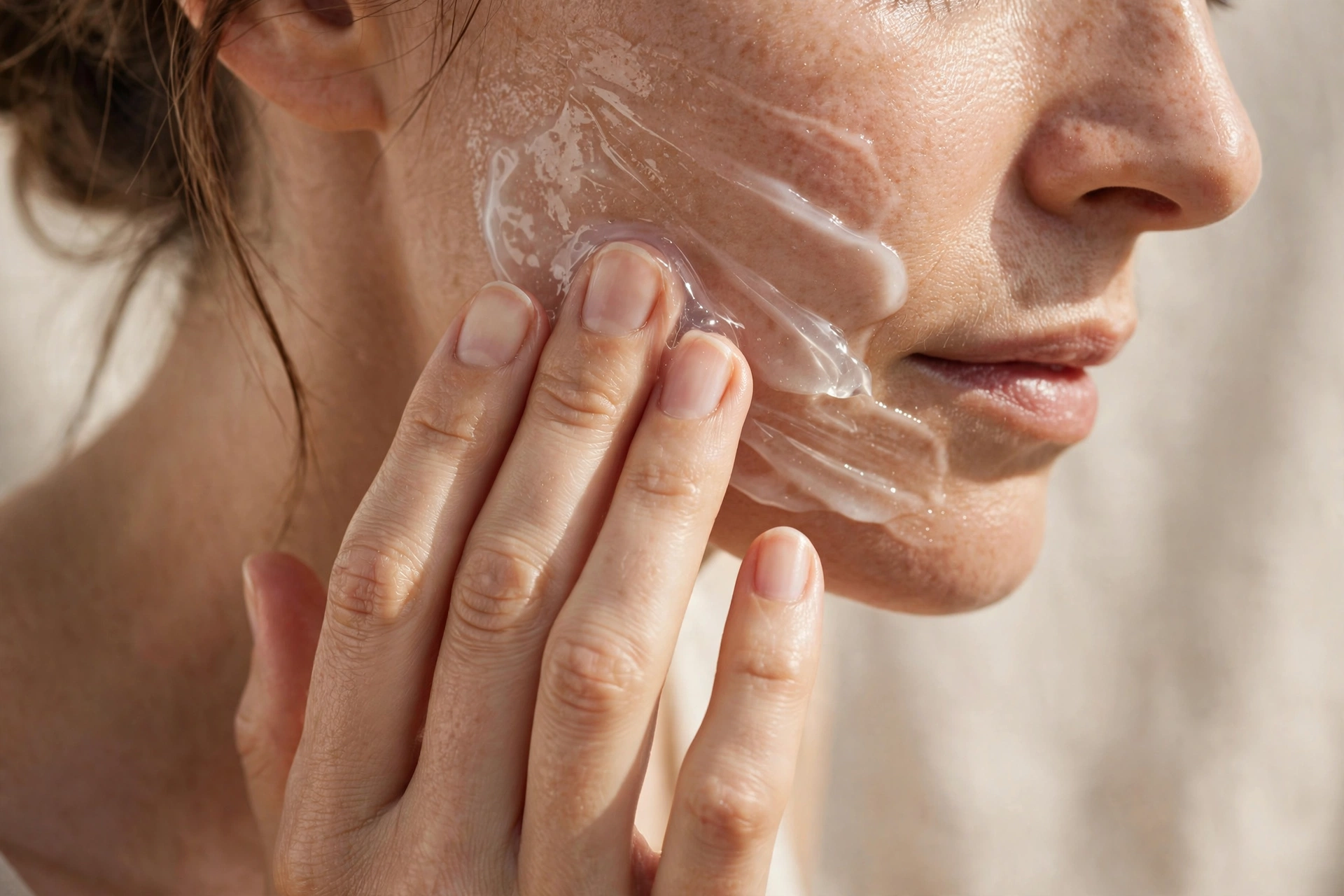
This one felt backwards until it worked. Oily skin can still be dehydrated, meaning it lacks water even though it has plenty of oil. Skipping moisturizer left mine tight under the shine and prone to flaking around my nose. Once I added a light moisturizer, the oil settled over a few weeks.
The trick is texture. Heavy creams clogged my pores, but gels and light lotions felt like nothing. Neutrogena Hydro Boost Water Gel is the one I’ve repurchased most. CeraVe PM Facial Moisturizing Lotion and Cetaphil Daily Hydrating Lotion are other options I’ve tried. I look for glycerin, hyaluronic acid, or ceramides on the label, and for the words non-comedogenic, which means the maker designed it not to clog pores. That label isn’t a guarantee, so I patch-test any new product along my jaw for a few days before using it all over.
I apply moisturizer to slightly damp skin, right after I pat my face dry. It sinks in better and feels lighter. A pea-sized amount covers my whole face and neck, and I spread it from the center outward. Too much and I’m shiny by lunch, so I scale back until it disappears into the skin.
Sunscreen is the other daytime essential, and it’s where many oily-skin people give up, because it often feels greasy. Gel formulas and fluids made for oily skin help a lot. I wear La Roche-Posay Anthelios Clear Skin or Supergoop Unseen Sunscreen, and both sit lightly under makeup. Use a broad-spectrum SPF 30 or higher, and reapply if you spend hours outdoors.
Ingredients I avoid on my face include heavy oils like coconut oil, which broke me out, and anything with strong fragrance, which irritated my cheeks. If you want to add an active, such as niacinamide, which may help regulate oil, introduce one product at a time. If you add three new things in one week and your skin reacts, you won’t know which one did it. I waited two weeks between additions.
Water-based moisturizers also play well with the salicylic acid nights. I apply the acid first, wait a few minutes, then moisturize on top, and my skin tolerates the pairing far better than it did acid alone.
Handle Midday Shine Without Stripping Your Skin

Shine around noon used to send me back to the sink to wash my face again, which only made things worse. What works is dealing with it on the surface and leaving the skin underneath alone.
Blotting papers are the habit in the title. I press one against my forehead, nose, and chin for a few seconds and lift it away. Rubbing smears oil around, so I press and release. A pack of Clean & Clear or Boscia papers lasts me weeks, and they soak up oil without disturbing sunscreen or makeup. A clean tissue works in an emergency.
A light dusting of translucent powder over the T-zone can extend the effect. I use a small amount with a fluffy brush, since too much looks cakey by evening. If I wear no makeup, I skip the powder and blot only. Mattifying primers help some people, though they didn’t do much for me, so I wouldn’t spend money until you’ve tried the basics.
Other habits quietly feed shine. Touching my face, resting my chin on my hand, and leaning my phone against my cheek all moved oil and bacteria around. Phone screens and pillowcases collect more than you’d expect, so I wipe my phone daily and change my pillowcase about once a week.
Food and sleep affect some people’s skin, but the evidence on diet is mixed, and I can’t promise that cutting any particular food will fix yours. What I can say is that sleeping badly and skipping meals made my skin look worse, so I notice that more than I notice dairy or sugar.
Hair products matter too. Oils and heavy conditioners that touch my forehead and hairline gave me small bumps along that edge, so I keep products off my face and wash my hair more often on greasy weeks.
After all this, my skin still gets shiny by late afternoon on hot days. I stopped treating that as failure. A quick blot, a sip of water, and I move on.